I recently interviewed with a company that was exploring its first fractional CFO engagement. During our discussion, it became clear they were trying to answer a fundamental question:
“What should we actually be evaluating?”
It’s a fair question.
Unlike hiring a controller or accountant, a fractional CFO isn’t primarily about bookkeeping, reporting, or compliance.
The role is about translating financial information into business decisions.
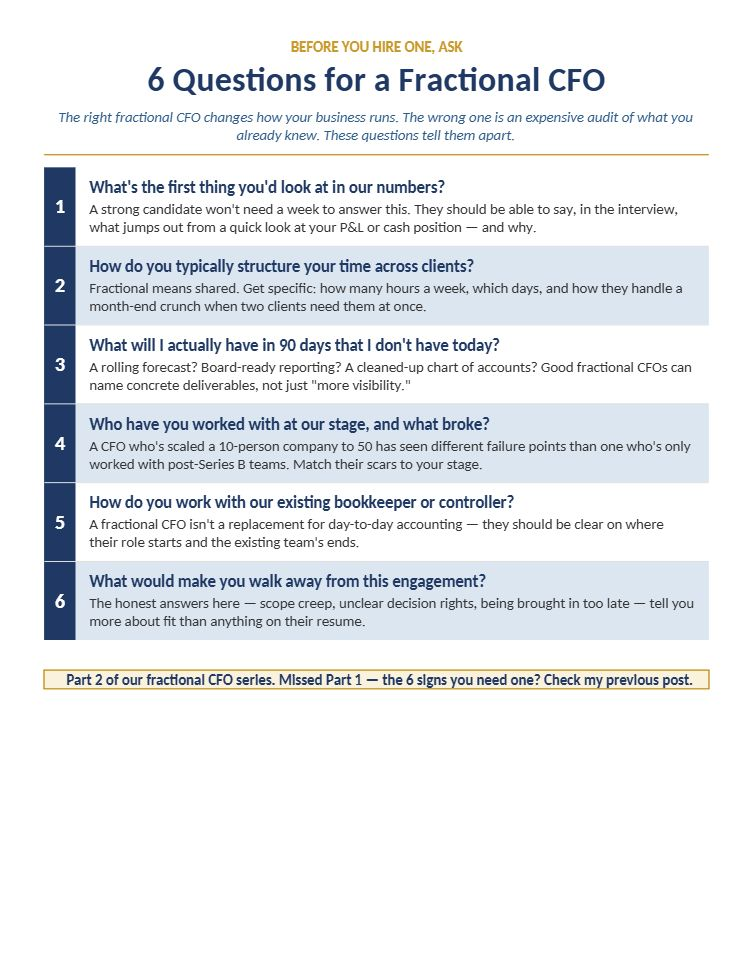
A strong fractional CFO should be able to quickly identify what matters in your numbers, define clear deliverables, work effectively with existing finance resources, and bring pattern recognition from businesses at a similar stage.
One question from the attached graphic stood out to me:
“What will I actually have in 90 days that I don’t have today?”
That single question often reveals whether a candidate is offering hours, activities, and meetings, or outcomes.
Founders don’t hire a fractional CFO because they want more spreadsheets.
They hire one because they want better decisions.